
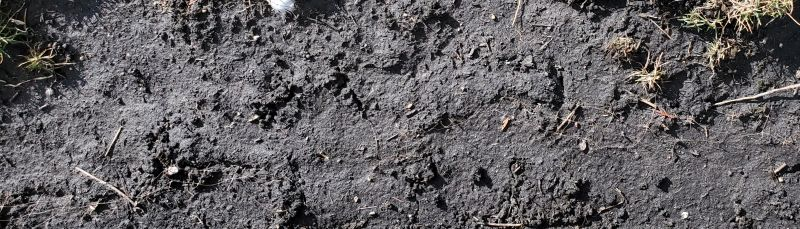
On my last day of early retirement in December, my team decided to host a video sendoff call for me. They all arrived with their favorite beverage and each of them gave a toast. Here’s what they said:
- “May you always be the person your dog thinks you are!”
- “Here’s to all who know you well but love you anyway.”
- “May your troubles be as few and far between as my grandmother’s teeth.” (My team had quite a sense of humor.)
- And lastly, “Here’s mud in your eye!”
I’ve heard “Here’s mud in your eye” before, but I was curious to understand the origin of this phrase and what it really meant. Some believe that it got started during World War I when soldiers where in muddy trenches. Others say that it originated in horse racing when a jockey would be following another jockey’s horse and then get splattered in the face with mud from the dirt track. It is also used as a toast or to wish someone well or for a long, healthy life.
But I think that the best interpretation of “Here’s mud in your eye” may be found in today’s gospel.
We heard Jesus pick up some clay, spit on it and then turned to the man who was born blind and said, “Here’s mud in your eye!” Ok, so he didn’t actually say that, but it does bring up a very good question: Why did Jesus send the blind man to wash his eyes in the Pool of Siloam? Think about it. Jesus could have just said, “Be healed,” and the man’s eyes would have been opened on the spot.
But Jesus wanted the man to do something, to take the first step, so he sent him to the Siloam Pool to wash his eyes. This process of washing led to a transformation. However, the blind man’s sight wasn’t restored or his eyes were not opened until he made a decision – a decision to take action.
Not only is this the case for the man born blind, but also for the woman at the well from last week’s gospel. Hearing these stories back-to-back helps us see both the similarities and differences in their encounters with Jesus.
Both the woman and the blind man are outcasts in their society. Jesus meets them where they are, breaking social barriers. In both cases, his actions lead to a life-changing transformation. The woman becomes a believer and a witness to her community, while the blind man gains both physical sight and spiritual insight. Bottom line, Jesus transforms them and gives them a new way of seeing.
We too are challenged today to see in a new way. Because here’s the thing: we cannot encounter Jesus and stay where we are – a transformation needs to take place. Transformation means moving from one thing to something better, and Jesus was all about transformation. When Jesus transforms us, we are then able to see differently or in a new way, allowing us let in the light of Christ.
So the saying, “Here’s mud in your eye” means coming to the realization that something in our lives has to change, and we need to take immediate action so we can see differently. It’s an opportunity for God to open our eyes from all the things that blind us so we can see the light, be the light, and shine the light. Let’s go deeper.
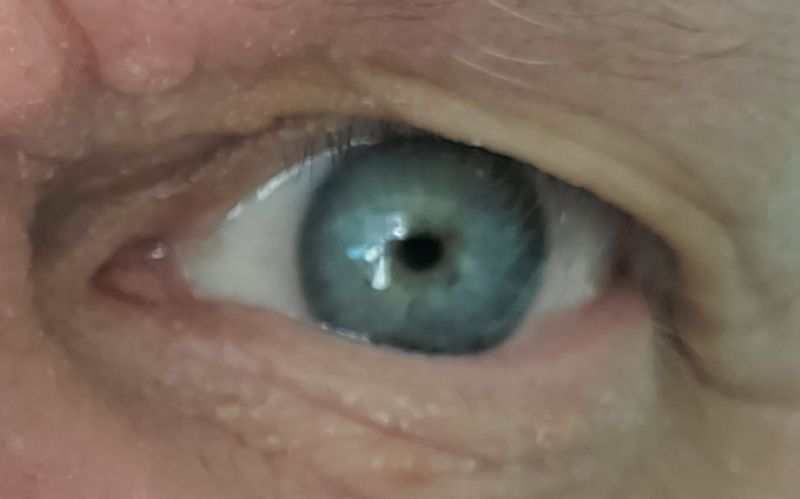 God calls us to see the light, and that is our Lenten call to prayer. But we have to remember that looking and seeing are two different things. Looking is about the outward appearance, where seeing is about the heart and inner awareness. As it states in the reading from Samuel, “Not as man sees does God see, because man sees the appearance but the Lord looks into the heart.” We look with our physical eyes but we also need to see with the eye of the heart. We need to put our expectations and preconceived notions to the side so that we may see as God sees. This is especially true when we are hurt, frustrated, angry, or upset. We must be able to see every person we encounter as God sees them: chosen, accepted, and loved.
Here are some important questions to ask ourselves: Are we profiling others by how they look or behave, where they’re from, or what they believe? What’s distorting our vision of them? What would help us to see beyond outward appearances? How has fear, bias, guilt, or resentment created blind spots for us? What would help us today to open our eyes and see the light?
In the silence of our prayer, God can open our eyes so we can see clearly, to recognize his presence, understand his purposes, and realize that we are all brothers and sisters in Christ.
We are also called to be the light, or to fast from the things that keep us in darkness. Just as the Pharisees failed to recognize their spiritual blindness, we are reminded that it can also be a challenge for us to recognize the areas in our lives where we fall short.
Spiritual blindness is the inability or the unwillingness to see what God is doing or perceive what God is doing. We all experience moments when we can’t see what God is doing in our lives; and other times, we’re simply unaware or unwilling to acknowledge it.
When our vision is clouded, we make decisions based on incomplete information, we react to circumstances without divine perspective, and we even miss opportunities for spiritual growth.
St. Paul urged the community at Ephesus to “Live as children of light, for light produces every kind of goodness and righteousness and truth.” We are being urged to look at our lives and recognize the areas where we experience blindness and what can be done to change it.
That’s why the practice of Lenten fasting helps us because when we give up those things that blur our vision (bad habits, behaviors, sin, etc.), and then fully give ourselves to the Lord, it opens our eyes to the presence of God. Then we will be filled with an amazing sense of peace, understanding, and joy.
We are also sent to shine the light, which is our call to almsgiving. It’s being a voice for the voiceless, a light to those in darkness, and ensuring we don’t turn a blind eye to other’s needs.
St. Mary Mackillop said, “Never see a need without doing something about it.” But let’s be honest, there are times when we encounter people who are suffering and we turn a blind eye to their struggles because supporting them would demand our time and effort. There are other flaws which also make us emotionally blind in expressing authentic love in our relationships with others due to hatred, prejudice, resentment and pride. This 4th Sunday of Lent is the perfect time to act and to wash the mud out of our eyes!
We have a wonderful Lenten Almsgiving Mission in our parish to help shine the light on those who are struggling in Eastern Kentucky. Our financial support is urgently needed to support food pantries and help address housing and transportation needs across the Diocese of Lexington. You can learn more about this in the gathering space.
Each one of us is being sent by Jesus – and as baptized Catholics, we are called to love and serve. That’s yet another way that we shine the light of Christ by being a church of action and by being the Body of Christ to others.
My sisters and brothers, we don’t always understand why mud gets in our eyes, but sometimes if it weren’t there, we would never bring those challenging areas of our lives into the open. Sometimes, God, in his infinite wisdom, uses mud to restore our sight.
Today, we are being sent to see the light, be the light, and shine the light. May this be our Lenten wake-up call of transformation: to take action, and to change so that we can see in a whole new way.
Here’s mud in your eye!
Looking for ways to pray during Lent? Check this out.