

How many of you made New Year’s resolutions? How many of you abandoned these already? Don’t feel bad. Statistics show that only 9% of us keep our resolutions throughout the year. 23% of us quit our goals by the end of the first week of January. 80% of us will bail on our resolutions by the end of this month. That’s pretty wild.
The purpose of New Year’s resolutions is to provide an opportunity for self-reflection and personal growth by leveraging the new year’s fresh start for motivation and accountability. This tradition dates back over 4,000 years to ancient Babylonians, who made promises to their gods for the new year, and also the Romans, who pledged good conduct.
 I made two resolutions this year. One was to lose weight, and it’s going great. Yesterday, I burned 2,000 calories. That’s the last time I’ll leave brownies in the oven while I nap. My second resolution was to be more assertive and confident…if that is ok with all of you. (I don’t want to be too pushy.)
Resolutions are great, because they tap into the human desire for change and transformation, and that is the message at the heart of our scripture readings today.
I believe that there are two key words that dominate this Sunday: Recognize and Respond. Let’s dive deeper into each one of these.
I want you to think back to Advent, when we heard about John the Baptist in the gospel readings. John was someone who felt called to be on the lookout for God, believing that God was sending someone to us who would change everything. And John attracted huge crowds and he told them that he was not the one, but when that person came, they’d recognize him.
But ironically, when Jesus came, John did not recognize him. In fact, he says this twice in our gospel that even with Jesus standing in front of him, he looked like any other follower – until God revealed him through the Holy Spirit and said that this was the one that he had been looking for. Even afterwards, John was wondering if he was right. A few weeks ago, we heard in another gospel that when John was in prison, he sent people to ask Jesus, “Are you the one who is to come or should we look for another?” There were so many things about Jesus that seemed so ordinary, that it didn’t seem like this was the one John was waiting for.
Many others were waiting for the Messiah, even the religious leaders. But they too did not recognize Jesus when he came.
But then, John identifies Jesus, not as a powerful conqueror, but as a gentle, sacrificial Lamb, forgiving our sins and calling disciples to recognize God’s presence in humility, justice, and peace.
Typically, we don’t think of John the Baptist having anything in common with us. But today, we can see ourselves in him. We are supposed to be able to recognize God’s presence in our everyday lives, even in the midst of this world filled with so much conflict, negativity, and animosity. We want to know where to turn, what to do and where to look. But often times, Jesus’ presence is not always where we’re looking for it. If that’s the case, then we need to change where we are looking. But how?
The place to start looking and listening might be right in front of us. We’re hoping to hear angels singing or hear voices echoing with dramatic messages; but instead, God often communicates through the day-to-day interactions of our lives, in the faces of friends, co-workers, and strangers, and in those quiet moments where God is speaking to us in a voice that seems so ordinary that we sometimes don’t even hear him. Pope Leo said the Lord chooses to be found where people least expect him – drawing near without keeping distance.
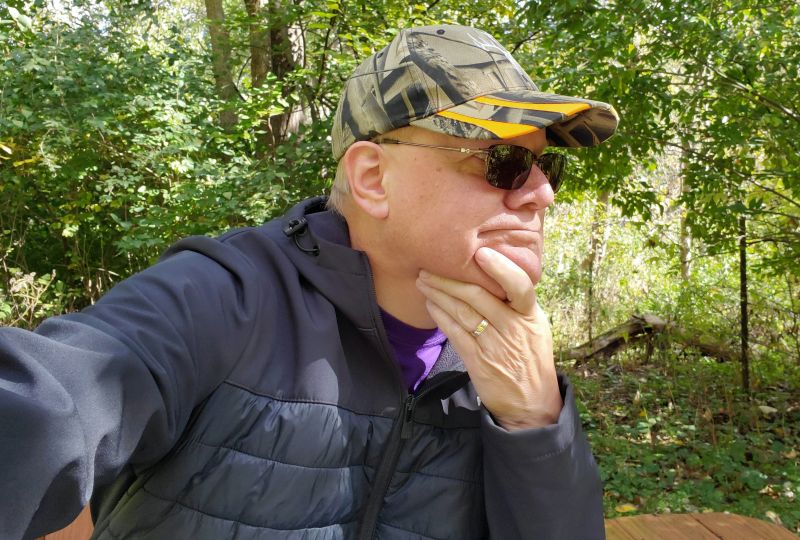 And when Jesus does draw near, will we be able to recognize him? Do we have the humility to set aside our own selfishness and recognize that Jesus might be in the very people and the very situations that we find so challenging? Are we able to recognize Christ in our enemies, in those who are being beaten down by life, those being criticized by others, in the immigrant, or in the homeless person we walk past on the street? That is where Jesus was found when he was walking on this earth; so just maybe, it is where to find him now.
If we are like John the Baptist and want to recognize the God we’re waiting for, know that he is not hiding. God is right here with us – always. Sometimes we are the ones who are keeping God at a distance. So, if we want to have a relationship with Jesus, we first need to recognize him right where we are.
Our readings also place an emphasis on God’s call and how we respond – because God’s call must be connected to a response.
John’s testimony of Jesus was very clear, and it’s also an invitation for each of us to reflect on how we testify to Jesus out in the world. Do our words and actions point to the love of Christ? Do our decisions show our commitment to following Jesus’ example? (WWJD) Are we willing to proclaim Jesus in our workplaces, schools, gyms, sporting events, and supermarkets?
John the Baptist is asking us to look at our lives and make changes – to make a resolution to reset our lives, to live purposefully, and to seek God’s will over worldly ambition.
But knowing God’s desires for us and having the courage to follow are two entirely different things. I mentioned in my homily last month that as of January 1st, I took an early retirement from my job instead of taking the risk of being laid off. It was a huge decision and I really struggled with it. But I felt God calling me to take that leap of faith; and now, I’m excited to see what God has planned for me.
But here’s the thing: even if we recognize God’s will for us, we can easily find ourselves struggling to respond, either out of fear or a lack of desire. So, how do we get over this hump?
First and foremost, I always recommend taking it to prayer. This has helped me time and time again with any major decision that comes my way. Second, we need to have courage to trust in God’s plan. I won’t lie to you, this step continues to be a struggle for me – but one that I am constantly working on. If you struggle with this like I do, St. Ignatius reminds us that we can pray to “desire the desire.” This means that God is able to work with whatever we offer to him – and the more we offer, the more God can transform us into what he calls us to be.
My sisters and brothers, let’s make a new resolution starting right now to recognize and respond. Through the Eucharist, may we be nourished and strengthened by the Lamb of God to recognize Jesus and then respond to our call to be that light of Christ to the world. When we do this, Jesus will transform us and completely change our lives forever – and that’s a resolution worth keeping.
If Jesus would suddenly appear, how would you react? Read more here.